Fallen Tree Removal in Tuolumne County: Who to Call When a Tree Comes Down
Winter wind drops trees all over the foothills. Here is what to check first, who handles what, and how fast the mess can be gone.

First, Make Sure It Is Safe
Before you think about cleanup, check three things:
- Power lines. If the tree is touching a line, or pulled one down, stay far away. Call 911 if anyone is in danger, and report it to PG&E at 1-800-743-5000. Do not let anyone touch that tree until the utility says the line is dead.
- Your house. If the tree hit your roof, stay out of the rooms under it until someone can look at the damage.
- Photos. Take pictures before anything gets moved. Your insurance company will want them.
Who Handles What
Not every downed tree needs the same crew, and calling the wrong one wastes a day. Here is the simple version:
- Tree on a power line: PG&E. Nobody else.
- Big tree on your house: Your insurance company first, then a tree company with a crane for the lift.
- Tree down in your yard, across your driveway, or blocking your road: That is us. We cut it up, haul it away, and clean up the mess.
- Limbs, branches, and storm debris everywhere: Also us. This is the most common storm call we get.
And if you call us about a tree that turns out to be too big for our crew, we will tell you straight and point you to the right people. No wasted trip. Our guide on who to hire for tree removal breaks down which trees need a full tree company and which do not.
How Fast We Can Be There
This is where we are different, and we say it plainly because it is the whole point:
- We answer the phone on the first ring. During a storm, that alone puts us ahead of half the county.
- Emergencies jump the line. A tree across your driveway or road means you cannot get out, or help cannot get in. We treat that as an emergency and can typically be on-site within one to two hours.
- Regular storm cleanup happens fast too. Usually the same day or the next day, not "sometime next week."
Save our number now: (209) 215-5355. The middle of a storm, with a tree across your driveway, is a bad time to start searching for someone who picks up.
What Storm Cleanup Includes
When we leave, the storm never happened. That is the goal. A storm cleanup visit can include:
- Cutting up fallen trees and large limbs
- Hauling all the wood and debris away
- Raking up the small stuff: branches, needles, and leaves the wind threw everywhere
- Checking your gutters and roof for storm debris while we are there
- Hauling off anything else the storm wrecked, like fence sections or shed parts
Watch Out for Storm Chasers
This may sound far-fetched, but we have actually seen it happen. After a big storm, trucks with out-of-county plates show up, knock on doors, and offer cleanup for cash up front. Some do fine work. Some take the deposit and disappear, or leave the job half done. It is just something to be aware of before you hand anyone money during a storm week.
The simplest protection is to hire someone you can find again next week. We are based in Columbia and work Tuolumne and Calaveras County year-round. And when our longtime customers tell us why they keep calling, it is rarely about the price. It is that the same person answers the phone every time, and the same crew that cleared their brush in the summer is the one that shows up in January.
The Cheapest Fallen Tree Is the One That Never Falls
Most of the trees we clean up in January were already dead in October, and everybody knew it. A dead or leaning tree near your house should come down on your schedule, in good weather, for a planned price. Not through your fence at 2 AM in a windstorm.
Walk your property this fall. If you see dead trees, hanging limbs, or anything leaning toward a structure, deal with it now. Our tree removal cost guide shows what a planned removal runs, our fall cleanup guide covers the full checklist, and our defensible space guide explains why dead trees need to go for fire safety too.
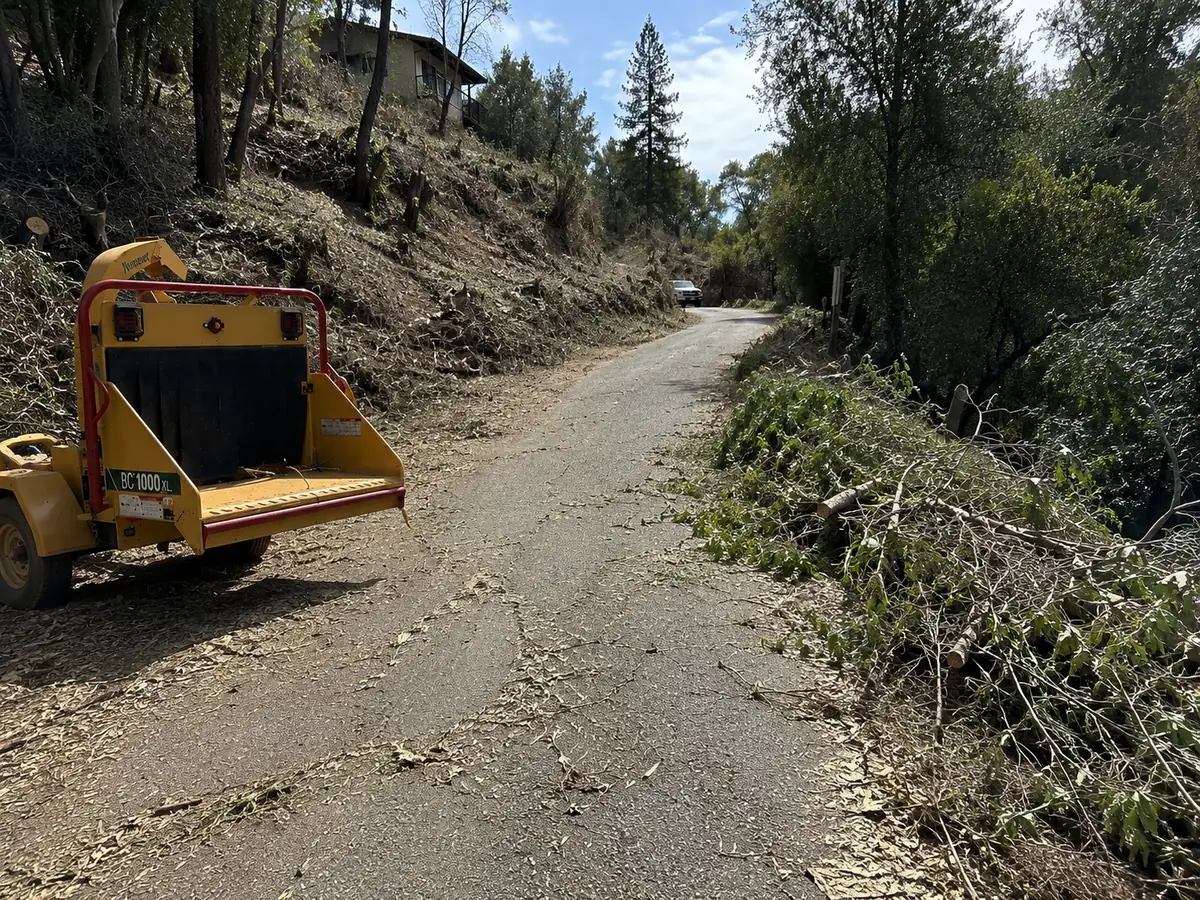
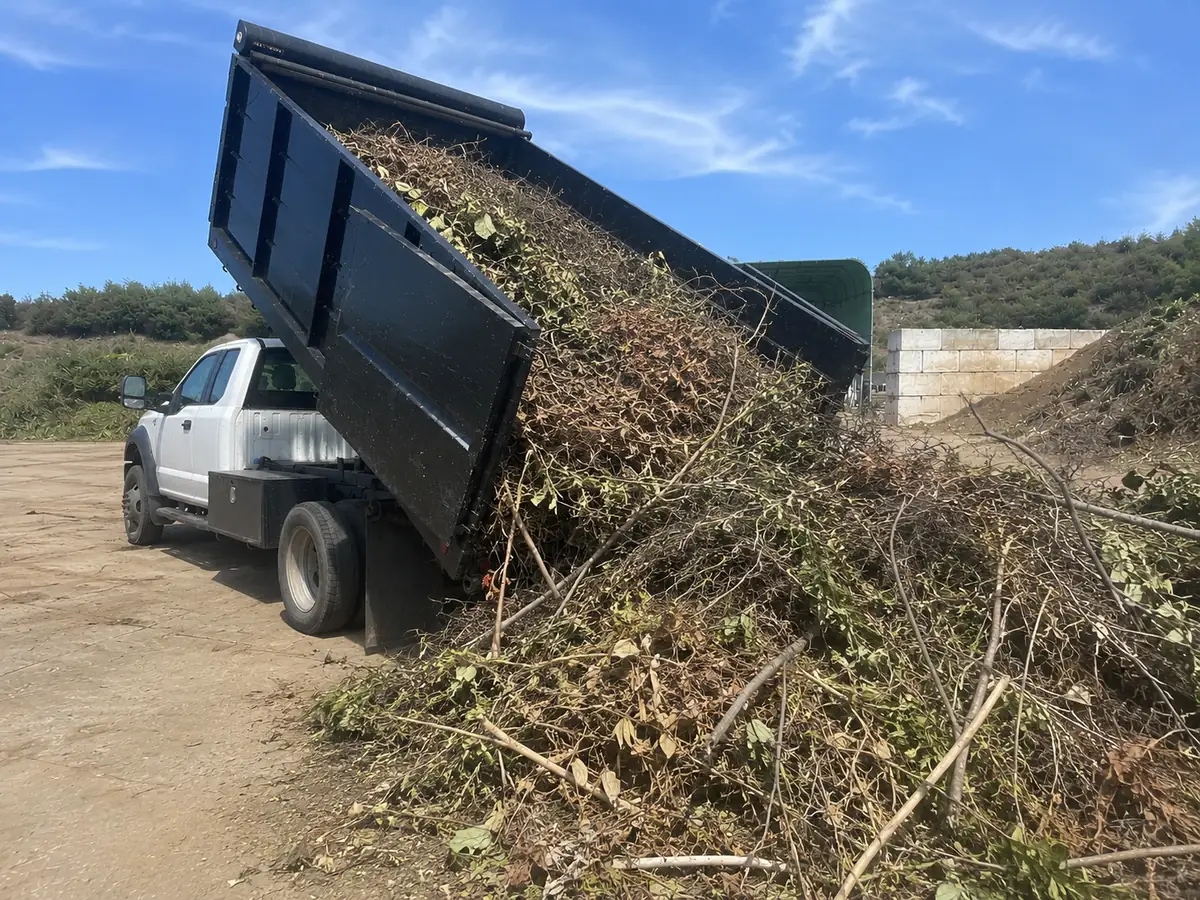
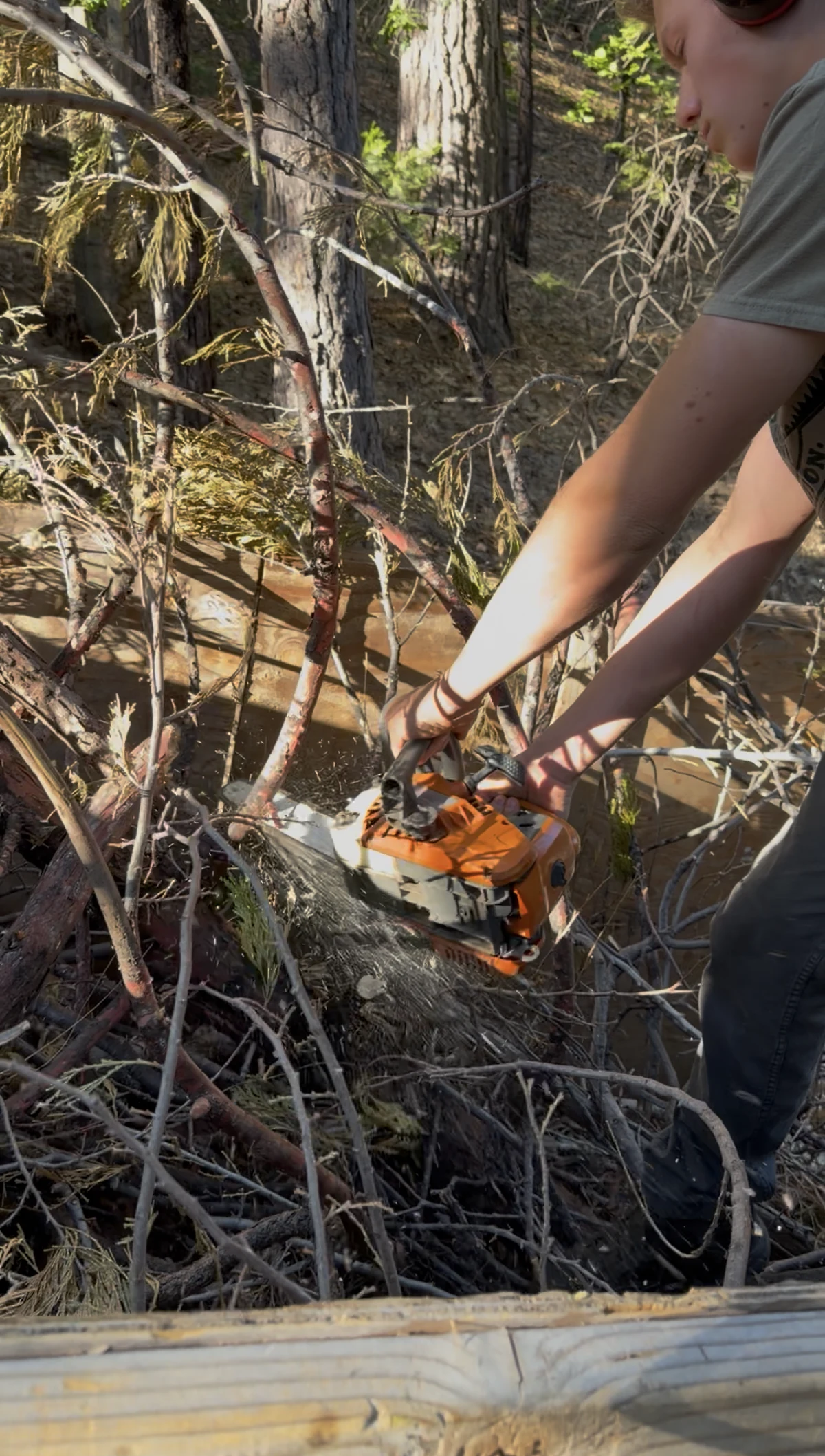
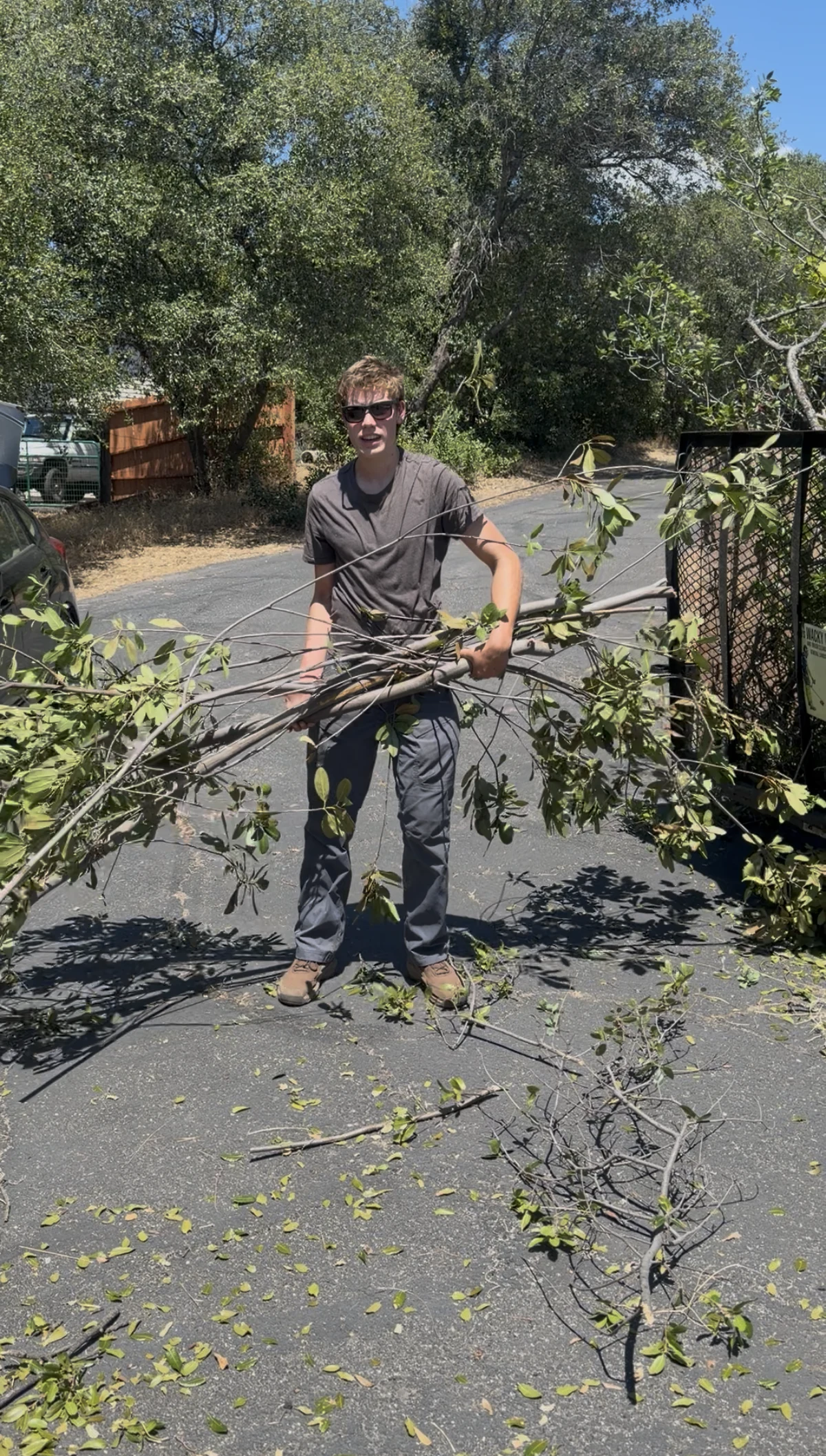
Photos From Our Storm and Debris Jobs
Frequently Asked Questions
A tree fell on a power line. Who do I call?
Not us, and not any cleanup crew. Stay far away from the tree and the line, call 911 if there is any danger, and report it to PG&E at 1-800-743-5000. Only after the utility says the line is dead should anyone touch that tree.
How fast can you get to a fallen tree?
If a tree is blocking your driveway or road, we treat it as an emergency and can typically be on-site within one to two hours. Regular storm cleanup usually happens the same day or the next day.
Do you haul the tree away too?
Yes. We cut it up, haul it off, and rake up the small debris. When we leave, the mess is gone, not stacked in a corner of your yard.
Will my homeowner's insurance pay for storm cleanup?
Often yes, especially if the tree hit a structure, fence, or driveway. Take photos before anything is moved, call your insurance company, and ask what they need. We can provide a written estimate for your claim.
Can you remove a dead tree before it falls?
That is the smart move. Dead and leaning trees near your home should come down on your schedule, not the storm's. Call us and we will take a look. If a tree is too big for our crew, we will tell you straight and point you to the right people.
Want to go deeper?
Storms don't stop at fallen trees, so here's who to call for the big tree work and how to get the rest of your place ready for winter.
