How Much Does Weed Abatement Cost in Tuolumne County? [2026 Real Pricing Breakdown]
Hourly vs project pricing, what drives the price, and how to avoid getting burned.
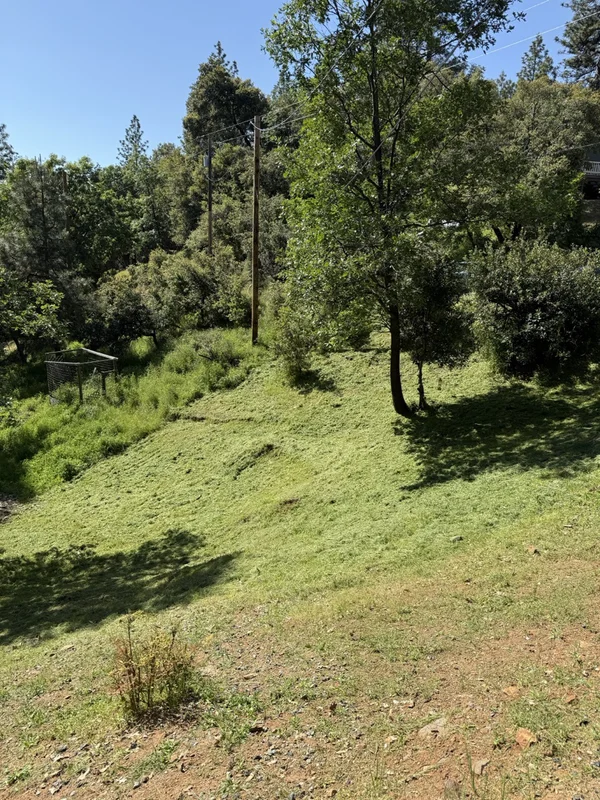
If you live anywhere in the Sierra foothills, you already know the deal. Spring hits, the rain stops, the grass shoots up to your knees, and suddenly your yard looks like the Amazon. Now you need someone to come knock it all down before fire season turns your land into a tinderbox.
So how much is this actually going to cost you?
Real talk: prices are all over the map around here. We've seen quotes for the same job range from 150 bucks to 1,500 bucks. That's not a typo. The reason for the giant range comes down to two things. How the company charges (hourly or by the project), and what your land actually looks like.
Let's walk through both so you know what a fair price looks like before anyone steps foot on your property.
The Two Main Ways Weed Abatement Gets Priced
Pretty much every weed whacking outfit in Tuolumne County, Calaveras County, and the surrounding foothills will charge you one of two ways:
- By the hour
- By the project (a flat price for the whole job)
Both have pros and cons. Neither is automatically better. It just depends on what kind of risk you want to take on as the homeowner.
Hourly Pricing: What You'll Actually Pay
Hourly weed abatement around here usually runs $30 to $60 per hour for a single worker. If a small two person crew shows up, expect that to roughly double.
The big appeal of hourly is simple: it can be cheaper. If your job really does only take an hour or two, you might walk away paying way less than a project quote.
But here's where it gets messy.
The Hidden Cost of Hourly
When someone gets paid by the hour, guess what happens? They slow down. They take longer breaks. They suddenly need to "go grab a part." We've seen jobs that should take three hours stretch into seven.
The other thing nobody tells you about hourly: the type of person you usually hire at this rate is often a guy working alone, off the books, with no real business behind him. Some of these folks are great. A lot of them are not.
Here's what we hear from clients all the time who tried the hourly route first:
- The guy showed up, worked for two hours, said he'd be back tomorrow, and never came back
- He finished half the property, took the cash, and ghosted
- He was drinking on the job
- He damaged something (a sprinkler line, a fence, a tree) and disappeared before anyone noticed
We're not saying every hourly worker is bad. Plenty are honest and hardworking. But when you're paying by the hour, you have almost no protection. The clock keeps ticking whether the person is hustling or not.
Bottom line on hourly: Cheapest option on paper. Highest risk in real life. Best if you already know and trust the person.
Project Pricing: What You'll Actually Pay
Project pricing means the company looks at your land, gives you one flat number, and that's the price. Doesn't matter if it takes them three hours or nine. The price is the price.
In Tuolumne and Calaveras counties, project quotes for residential weed abatement usually fall somewhere between $200 and $1,500, with most jobs landing in the $300 to $700 range.
Why such a big range? We'll get to that in a sec.
The Pros of Project Pricing
- You know the cost up front. No surprises. No "well, it took longer than I thought." The number you see is the number you pay.
- No clock watching games. The crew has every reason to work fast and clean. Their profit goes up the better and quicker they work, not the slower they go.
- The crew is usually more legit. Companies that do project pricing tend to be actual businesses, not a guy with a beat up truck and a weed whacker. That means insurance, real workers, and a phone number that rings.
The Cons of Project Pricing
- There's usually a minimum. Even if your yard is tiny, expect a minimum charge of around $200 to $300. Crews still have to load up the trailer, drive out to your property, and burn fuel. That costs money before any blade hits grass.
- You might overpay on a small easy job. If your job really would have taken one hour, hourly would have been cheaper.
Bottom line on project pricing: More money some of the time. Way fewer headaches almost every time.
What Actually Drives the Price of Your Job
Whether you go hourly or project based, the same four things move the price up or down. If you understand these, you'll know if a quote you're getting is fair or if someone is trying to squeeze you.
1. How Much Land Needs Cutting
This is the big one. Square footage is king.
A small flat backyard? Probably under $200.
A quarter acre with thick growth? Maybe $300 to $500.
A full acre or more with mixed terrain? Could easily run $700 to $1,500 or higher.
Once you start getting into 2 acre, 5 acre, or 10 acre lots (super common around Sonora, Twain Harte, Jamestown, Columbia, and the Calaveras County areas), pricing starts climbing fast.
2. How Thick the Grass Is
Is the grass thin enough to walk through, or is it a thick jungle with blackberries and star thistle so dense you can't see your boots? Those are two completely different jobs.
Light growth is fast and easy. Thick growth eats blades, slows down crews, and sometimes needs a totally different machine to get through. If your land hasn't been touched in two or three years, expect to pay a premium.
3. How Tall the Grass Is
Cal Fire wants annual grass cut down to 4 inches max under California's defensible space law. Going from 6 inch grass to 4 inches? Easy. Going from 4 foot grass down to 4 inches? That's a real project. Not sure if your property would pass an inspection? Take our free 2-minute defensible space quiz.
Tall grass also hides rocks, stumps, sprinkler heads, and trash. Hidden hazards slow crews down and risk damaging equipment, which means a higher price.
4. Whether the Land Is on a Slope
This is the wild card. Flat land is fast. A 30 degree slope is slow, dangerous, and sometimes needs a totally different setup like a brush mower with tracks or a hand crew working with safety lines.
A flat quarter acre backyard might be $250. That same quarter acre on a steep hillside in Twain Harte? Easily $400 to $600. Steep terrain can bump the price 20 to 50 percent depending on how gnarly it is.
A Quick Way to Estimate Your Own Price
Here's a rough framework most local crews use behind the scenes. Rate your property from 1 to 5 on each of these:
- Size of area to be cut
- Thickness of growth
- Height of growth
- Slope of land
Add up the numbers. The higher the total, the higher the price. Anything scoring 12 or more is going to be on the upper end of pricing, no matter who you hire.
To Give You an Idea How We Do It
We didn't want to make this whole article about us, because honestly there are several decent options in the foothills and you should pick whoever fits your situation best. We even ranked them in our guide to the top 5 weed abatement companies in Sonora. But if you're thinking about us, here's how we run things:
- We charge by the project, not the hour, so you know your price upfront
- When you call, somebody picks up
- When you send a message, you get a real reply
- When we say we'll be there Tuesday at 9, we're there Tuesday at 9
That's pretty much it. We just try to do what we say we're going to do.
Ready for Your Free Estimate?
If you want to know what your property would actually cost, the easiest way is just to ask. We're happy to come out, walk the land with you, and give you a real number with no pressure to book.
You can also call us anytime. We actually answer.
Frequently Asked Questions
What price range should I expect for weed abatement in Tuolumne County?
It really depends on the property. A small, flat backyard with light growth might land in the $200 to $300 range, while larger lots with thick growth, tall grass, or steep terrain can run anywhere from a few hundred dollars up to $1,500 or more. The biggest price drivers are how much area needs cutting, how thick and tall the growth is, and how steep the land is. The only way to get a real number is to have someone walk the property.
Is hourly or project pricing better for weed abatement?
Project pricing is usually safer because you know the total cost up front and the crew has every reason to work efficiently. Hourly can be cheaper for small jobs but comes with the risk of jobs dragging on or workers not finishing.
What's the cheapest way to get weeds cleared?
Doing it yourself with a weed eater is the cheapest, if you've got the time and the body for it. After that, hiring a single hourly worker is usually next cheapest, but with the highest risk. Project pricing from a real crew is the most predictable.
When should I schedule weed abatement in the foothills?
The sweet spot is late April through early June. Grass is tall enough to cut clean but not so dry it's a fire risk to even mow. Wait too long and you'll be paying premium prices because every crew in town is booked solid.
What size property has a minimum charge?
Most crews around Sonora, Twain Harte, Angels Camp, and San Andreas have a minimum of around $200 to $300 even for tiny jobs, because of drive time and equipment costs.
Want to go deeper?
Still running the numbers? These cover brush clearing prices, free county help, and the do-it-yourself route.
